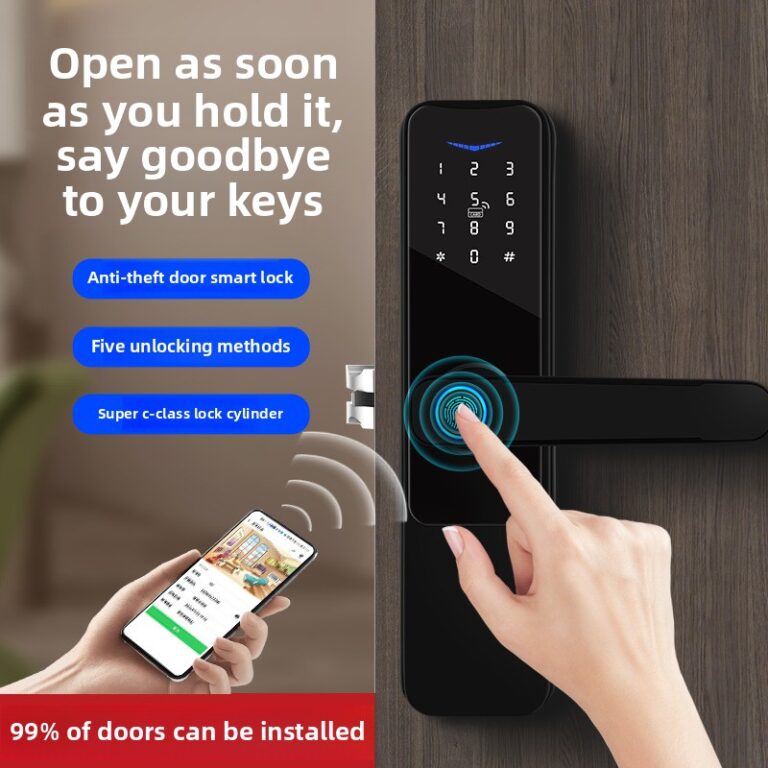
Choosing the best smart door lock for your home is about more than finding a lock with a modern design. A good smart door lock should provide reliable security, convenient access, easy installation, and compatibility with your existing door. With so many options available, including fingerprint smart locks, keypad locks, WiFi smart locks, Bluetooth locks, and fully automatic smart locks, understanding their differences can help you make the right decision.
Whether you are upgrading your traditional door lock, building a smart home, or looking for a convenient keyless entry solution, this guide explains the most important factors to consider before purchasing a smart door lock.
1. Understand the Different Types of Smart Door Locks
Before choosing a smart door lock, consider how you want to unlock your door. Different unlocking methods offer different levels of convenience and functionality.
Fingerprint Smart Door Locks
Fingerprint smart locks allow homeowners to unlock doors using biometric recognition. You do not need to carry physical keys or remember passwords. They are especially convenient for families and people who frequently enter and leave their homes.
Password and Keypad Smart Door Locks
These locks use digital passwords to control access. Family members can receive individual passwords, and some models support temporary access codes for visitors, cleaners, or rental guests.
WiFi Smart Door Locks
WiFi smart locks connect to your home network and allow remote access through a smartphone application. Depending on the model, you can remotely lock or unlock your door, manage users, and receive access notifications.
Bluetooth Smart Door Locks
Bluetooth locks communicate directly with nearby smartphones. They are suitable for users who prefer local smartphone control without requiring a continuous internet connection.
RFID Card Smart Door Locks
RFID locks use compatible cards or key fobs for convenient access. They are commonly used in apartments, hotels, offices, and residential properties.
When comparing these options, consider whether you need one unlocking method or multiple access methods in a single device.
2. Check the Security Features
Security should be your first priority when purchasing a smart door lock. A smart lock should provide reliable physical protection as well as secure electronic access management.
Important security features include:
-
Anti-Password Peeping: Prevents unauthorized users from easily discovering your password.
-
Anti-Tampering Alarm: Alerts you when someone attempts to damage or manipulate the lock.
-
Automatic Locking: Locks the door automatically after a preset period.
-
Incorrect Password Protection: Temporarily disables password entry after multiple failed attempts.
-
Fingerprint Recognition: Uses biometric identification to control access.
-
Emergency Mechanical Key: Provides an alternative unlocking method if electronic functions fail.
You should also check the lock’s encryption, firmware update policy, authentication protection, and resistance to physical attacks.
Remember that electronic features cannot compensate for weak mechanical construction. Choose a smart lock with a strong locking mechanism and suitable security certification for your market.
3. Choose the Right Unlocking Methods
A smart door lock with multiple unlocking methods provides greater flexibility for different household members.
For example, a family might prefer fingerprint unlocking for daily use, passwords for temporary visitors, and mechanical keys for emergencies.
Consider the following comparison:
|
Unlocking Method |
Main Advantage |
Best Application |
|---|---|---|
|
Fingerprint |
Convenient and keyless |
Families |
|
Password |
Easy access management |
Homes and rentals |
|
Smartphone App |
Remote or mobile control |
Smart homes |
|
RFID Card |
Simple and convenient |
Apartments and offices |
|
Mechanical Key |
Backup access |
Emergency situations |
|
Bluetooth |
Local wireless access |
Smartphone users |
If you have children, elderly family members, or frequent visitors, selecting a model with several unlocking options can make everyday access easier.
4. Consider WiFi, Bluetooth, and Smart Home Compatibility
Connectivity determines how you interact with your smart door lock.
WiFi smart locks are suitable for homeowners who want remote access and real-time notifications. Bluetooth smart locks are generally designed for local control when your smartphone is within communication range.
Some advanced models also support Zigbee, Matter, or integration with smart home platforms.
Before purchasing, check:
-
Does the lock support your home WiFi frequency?
-
Can you manage access through an Android or iOS application?
-
Does it support remote unlocking?
-
Can you receive notifications when someone enters?
-
Is it compatible with Alexa, Google Home, or other smart home systems?
-
Does remote access require an additional gateway?
Do not assume that every smart lock with a mobile application supports remote unlocking. Some Bluetooth-only models require an additional gateway for internet-based control.
5. Check Door Compatibility and Installation Requirements
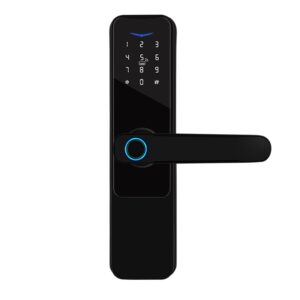
Even a high-quality smart lock may not work properly if it is incompatible with your door.
Before ordering, check the following measurements and specifications:
-
Door thickness.
-
Door material, such as wood, metal, or aluminum.
-
Lock body dimensions.
-
Door opening direction.
-
Existing lock cylinder and mortise dimensions.
-
Distance between the handle and locking mechanism.
-
Available installation space.
Some smart locks are designed for standard American deadbolts, while others are designed for European mortise locks or specific Asian lock body standards.
If you are replacing an existing lock, confirm the dimensions carefully to avoid unnecessary modifications.
6. Evaluate Battery Life and Emergency Power Options
Most electronic smart door locks operate using batteries. Battery performance is important because frequent battery replacement can become inconvenient.
Look for these features:
Low Battery Warning: Notifies you when battery power is running low.
Emergency USB Power: Allows temporary external power when the internal batteries are depleted, if supported by the model.
Mechanical Key Backup: Provides an alternative way to enter your home.
Power-Saving Design: Helps extend battery life during normal operation.
Battery life depends on usage frequency, connectivity, motor operation, and environmental conditions. Always check the manufacturer’s actual specifications rather than relying only on advertised battery-life estimates.
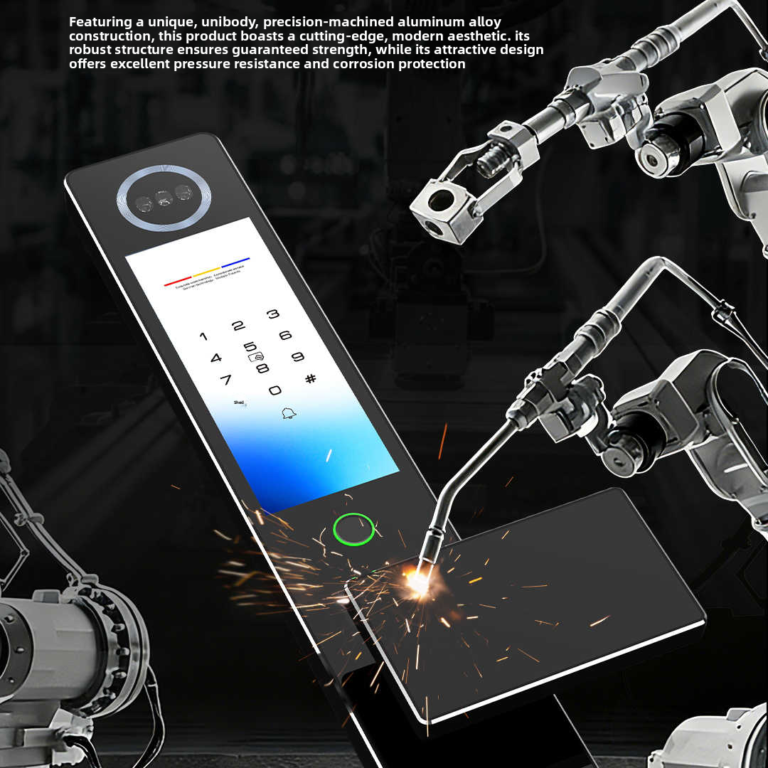
7. Compare Build Quality and Materials
The physical construction of a smart door lock directly affects its durability and long-term performance.
Pay attention to:
-
Lock body material.
-
Handle strength.
-
Panel construction.
-
Lock cylinder quality.
-
Waterproof and dust-resistance ratings.
-
Operating temperature range.
-
Resistance to corrosion and daily wear.
For outdoor installations, weather resistance is particularly important. A lock exposed to rain, humidity, sunlight, or extreme temperatures should have suitable environmental protection.
8. Consider Your Budget and Long-Term Value
Smart door locks are available at different price points. However, the cheapest option is not necessarily the most economical choice.
|
Price Level |
Typical Features |
|---|---|
|
Entry-Level |
Password, mechanical key, basic electronic access |
|
Mid-Range |
Fingerprint, password, RFID, mobile app |
|
Advanced |
WiFi connectivity, remote access, alarms, multiple access methods |
|
Premium |
Advanced biometric features, smart home integration, enhanced construction |
When comparing prices, consider the warranty, replacement parts, software support, installation costs, and after-sales service.
A slightly more expensive lock may offer better long-term value if it has more reliable components and stronger technical support.
9. Choose a Reliable Smart Door Lock Manufacturer
The manufacturer is another important factor. A reliable supplier should provide detailed product specifications, installation instructions, technical support, and warranty information.
If you are purchasing smart locks for a residential project, apartment development, hotel, or wholesale business, consider suppliers that offer:
-
Multiple smart lock models.
-
Different unlocking configurations.
-
OEM and ODM customization.
-
Stable product quality.
-
Competitive wholesale pricing.
-
Technical documentation.
-
Reliable after-sales support.
For distributors and property developers, working directly with an experienced smart lock manufacturer can also provide more flexibility when selecting product specifications and customizing solutions.
10. Final Checklist: Which Smart Door Lock Should You Buy?
Before making your final decision, use this checklist:
The best smart door lock is not necessarily the one with the most features. It is the one that matches your door, security requirements, household habits, and budget.
Conclusion: Find the Right Smart Door Lock for Your Home
Choosing the right smart door lock requires careful consideration of security, unlocking methods, connectivity, installation compatibility, battery life, and product quality.
For most modern households, a fingerprint smart door lock with password access, mechanical key backup, and optional smartphone connectivity provides a practical balance between convenience and security.
If you are looking for smart door lock products for residential use, commercial projects, or wholesale distribution, Suik Smart Lock offers smart lock solutions designed for different door types and access requirements.
Visit matuyasmart.comto explore available smart door lock products and find a suitable solution for your project.