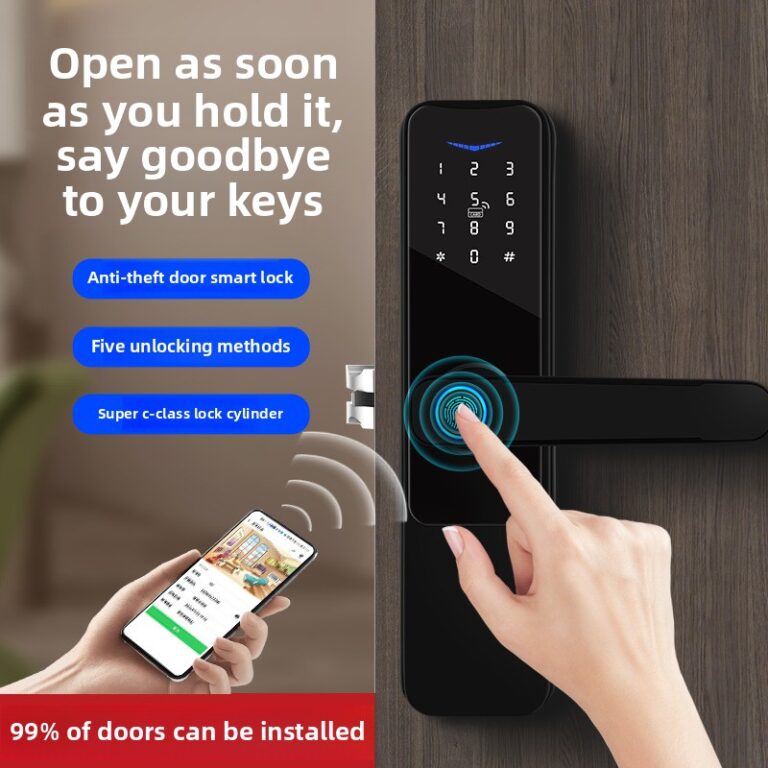
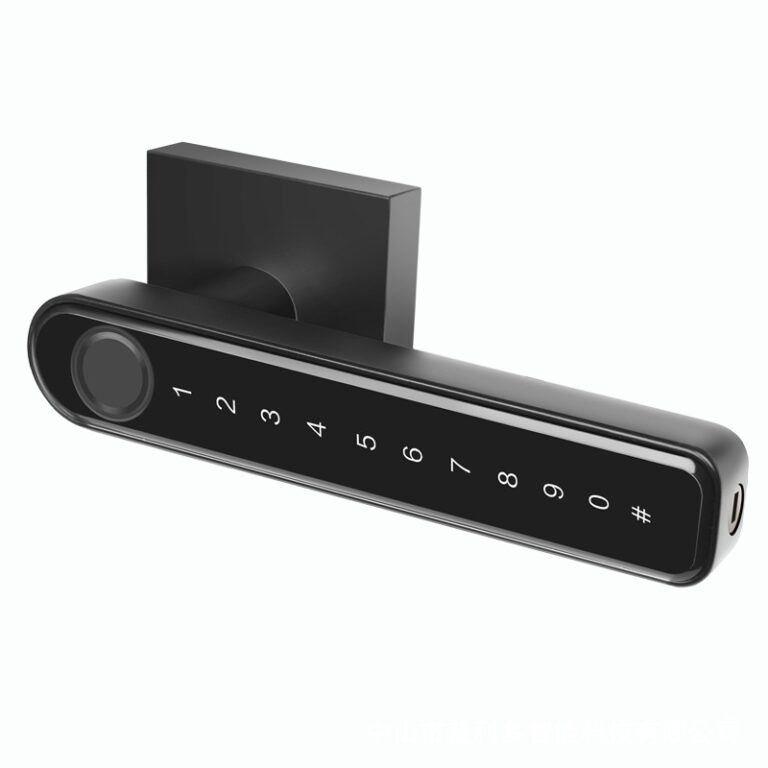
Smart door locks are becoming increasingly popular for residential homes, apartments, villas, offices, and commercial buildings. However, one common concern among buyers is whether smart door locks are waterproof and whether they can withstand outdoor conditions such as rain, humidity, dust, and extreme temperatures.
The answer is yes, many smart door locks are designed for outdoor installation, but not every smart lock is waterproof. Their suitability depends on the waterproof rating, housing materials, sealing technology, electronic component protection, and installation environment.
In this guide, we will explain how to choose a reliable waterproof smart door lock and what features buyers should consider before purchasing one.
1. Are Smart Door Locks Waterproof?
Not all smart door locks are completely waterproof. Most models designed for exterior doors offer water-resistant protection rather than being fully waterproof.
For example, some smart locks feature sealed keypads, protective electronic housings, waterproof fingerprint sensors, and weather-resistant exterior panels.
These features help prevent rainwater, moisture, and dust from entering sensitive electronic components.
However, buyers should understand the difference between water-resistant and waterproof:
-
Water-resistant smart locks: Designed to withstand ordinary rain, splashes, and moisture.
-
Waterproof smart locks: Designed with more comprehensive protection against water penetration, according to their specified IP rating.
-
Indoor smart locks: Designed for protected environments and may not withstand direct exposure to rain or excessive humidity.
It is important to check the manufacturer’s actual specifications rather than relying only on product descriptions that use the word waterproof.
2. What IP Rating Should an Outdoor Smart Lock Have?
The IP rating (Ingress Protection) is one of the most important specifications when choosing an outdoor smart door lock.
It indicates how effectively the product protects its internal components against solid objects and water.
Here are some commonly encountered IP ratings:
| IP Rating | Protection Level | Recommended Environment |
|---|---|---|
| IP44 | Protection against splashing water | Covered entrances |
| IP54 | Limited dust protection and water splashes | Sheltered outdoor doors |
| IP55 | Dust protection and water jets | Semi-exposed entrances |
| IP65 | Dust-tight and protected against water jets | Exposed outdoor applications |
| IP66 | Dust-tight and protection against powerful water jets | More demanding outdoor environments |
| IP67 | Dust-tight and temporary immersion protection under specified test conditions | Specialized wet environments |
For most outdoor smart lock applications, IP65 or higher is worth considering, particularly when the lock is exposed to rain.
However, an IP rating does not automatically mean that the entire lock can be submerged or continuously exposed to water. Always check which parts of the lock are covered by the rating.
3. Can Smart Door Locks Work in Rainy Weather?
Yes. Outdoor-rated smart door locks can operate in rainy weather when installed according to the manufacturer’s instructions.
Modern smart locks may incorporate several weather-protection features:
Sealed Keypad Design
A sealed keypad helps prevent water from entering through the buttons and touch-sensitive areas.
Water-Resistant Fingerprint Sensors
Protective sensor surfaces help reduce the risk of moisture damaging the fingerprint recognition module.
Protective Electronic Housing
A properly designed enclosure helps protect circuit boards, batteries, motors, and other electronic components from moisture.
Waterproof Structural Sealing
Rubber gaskets and sealing materials help reduce water penetration through panel joints, screw holes, and cable connections.
Nevertheless, heavy rain, strong winds, and standing water can create additional challenges. Installing a protective canopy above the door can provide an extra layer of protection.
4. Are Smart Door Locks Suitable for Outdoor Gates?
Not every smart door lock is suitable for outdoor gates.
This is an important consideration because an outdoor gate may expose both sides of the lock to rain, sunlight, dust, and temperature fluctuations.
Traditional residential smart locks are often designed with the exterior keypad facing outdoors and the interior electronic assembly protected inside the house.
An outdoor gate may require a different design.
Before purchasing a smart lock for a gate, consider the following:
-
Both sides of the lock should have appropriate weather protection.
-
The lock should have a suitable IP rating for the installation environment.
-
The housing should resist corrosion and UV exposure.
-
The electronic components should operate reliably under local temperature conditions.
-
The lock should support the gate’s thickness, structure, and locking mechanism.
For fully exposed gates, choose a smart lock specifically designed for outdoor gate installations rather than assuming a standard residential smart lock will work.
5. What Materials Are Best for Waterproof Smart Door Locks?
Housing materials directly affect the durability and service life of outdoor smart locks.
Some commonly used materials include:
Stainless Steel
Stainless steel offers good corrosion resistance and mechanical strength. It is particularly useful for outdoor applications and environments with high humidity.
Zinc Alloy
Zinc alloy provides a balance of strength, durability, and design flexibility. It is widely used in smart lock housings and handles.
Aluminum Alloy
Aluminum alloy is lightweight and offers good corrosion resistance when properly treated and coated.
Protective Coatings
Surface treatments and protective coatings help reduce oxidation, scratches, and environmental damage.
For coastal areas or locations with frequent rainfall, buyers should pay particular attention to corrosion resistance and the quality of the surface treatment.

6. Can Waterproof Smart Locks Work in Hot and Cold Weather?
Waterproof protection is only one part of outdoor performance.
Temperature resistance is equally important because electronic smart locks contain batteries, motors, sensors, and circuit boards.
In hot environments, prolonged exposure to direct sunlight may increase the internal temperature of the lock and affect electronic components.
In cold environments, low temperatures can reduce battery performance and affect mechanical movement.
When choosing an outdoor smart lock, check:
-
Operating temperature range.
-
Battery operating temperature.
-
Humidity resistance.
-
Protection against condensation.
-
UV resistance.
-
Material durability under temperature changes.
For regions with extremely hot summers or freezing winters, selecting a model specifically tested for those conditions is recommended.
7. How to Protect a Smart Door Lock from Rain and Moisture
Even when using an outdoor-rated smart lock, proper installation and maintenance are essential.
Here are several practical recommendations.
Install the Lock Under a Protective Canopy
Whenever possible, install the smart lock under a porch roof or door canopy. This reduces direct exposure to heavy rain and sunlight.
Check Installation Seals
Make sure mounting holes, cable connections, and panel joints are properly sealed according to the manufacturer’s installation instructions.
Avoid Water Accumulation
Position the lock so that water cannot easily collect around the keypad, fingerprint sensor, or housing connections.
Clean the Lock Regularly
Use a soft, slightly damp cloth to remove dirt and moisture. Avoid high-pressure water cleaning unless specifically permitted by the manufacturer.
Check Batteries and Electronic Components
Inspect the battery compartment and exterior housing periodically for signs of corrosion, moisture, or damaged seals.
8. What Features Should You Look for in an Outdoor Smart Door Lock?
If you are purchasing a smart lock for an exterior door, villa entrance, office, or outdoor gate, consider more than just its waterproof rating.
The following features can improve convenience, security, and long-term reliability.
| Feature | Main Benefit |
|---|---|
| Fingerprint Recognition | Convenient biometric access |
| Password Entry | Keyless access without physical keys |
| RFID Card Access | Easy access for family members and employees |
| Smartphone App | Remote management and access monitoring |
| Mechanical Key Backup | Alternative access method |
| Automatic Locking | Helps prevent accidental unlocked doors |
| Anti-Tamper Alarm | Provides additional security protection |
| Waterproof Housing | Helps protect electronic components from moisture |
The ideal configuration depends on the application. For residential entrances, fingerprint and password access may be sufficient. For commercial buildings, multiple access methods and centralized access management may be more important.
9. Waterproof Smart Door Locks vs. Standard Smart Door Locks
What is the difference between an outdoor-rated smart lock and a standard smart lock?
| Comparison | Outdoor-Rated Smart Lock | Standard Smart Lock |
|---|---|---|
| Water Resistance | Designed for specified outdoor exposure | May have limited protection |
| Dust Protection | Depends on IP rating | Depends on product design |
| Housing Materials | Often uses weather-resistant materials | Varies by model |
| Humidity Resistance | Designed for specified conditions | May be limited |
| Outdoor Installation | Suitable when installation conditions match specifications | Generally requires sheltered installation |
| Maintenance | Requires periodic weather-protection checks | Requires normal maintenance |
The most important difference is the level of environmental protection.
If you plan to install a smart lock on an exposed entrance or outdoor gate, always select a model specifically designed for that application.
10. How to Choose the Right Waterproof Smart Door Lock?
Choosing the right outdoor smart lock requires considering your installation environment, security requirements, and budget.
Here are five important purchasing considerations:
-
Check the IP Rating: Look for a clearly documented IP rating and confirm which components it covers.
-
Evaluate the Installation Location: Determine whether the lock will be installed under a roof or directly exposed to rain.
-
Choose Durable Materials: Stainless steel, aluminum alloy, and properly treated zinc alloy are worth considering.
-
Check Temperature Resistance: Make sure the lock supports the climate in which it will operate.
-
Verify Multiple Access Methods: Consider fingerprint, password, RFID card, smartphone app, and mechanical key options.
For manufacturers, distributors, wholesalers, and smart home businesses, it is also important to evaluate product quality, customization capabilities, technical support, and long-term supply stability.
Frequently Asked Questions (FAQs)
Q1: Can I install a smart door lock on an exterior front door?
Yes. Many smart door locks are designed for exterior residential doors. However, the exterior keypad and interior assembly may have different weather-protection capabilities. Check the manufacturer’s installation requirements.
Q2: Can rain damage a fingerprint smart lock?
Rain should not damage a properly designed outdoor-rated fingerprint smart lock when used within its specified environmental conditions. However, excessive water exposure can affect products without adequate protection.
Q3: Is IP65 waterproof enough for an outdoor smart lock?
IP65 provides dust-tight protection and protection against water jets. It is a useful specification for outdoor applications, although installation conditions and protection of the entire lock assembly must also be considered.
Q4: Can I install a normal smart lock on an outdoor metal gate?
Not necessarily. A normal residential smart lock may have an indoor-only rear assembly. For an exposed metal gate, choose a model specifically designed for outdoor gate applications.
Q5: Do waterproof smart locks require special maintenance?
They require periodic inspection of seals, housing connections, battery compartments, and surface conditions. Proper cleaning and installation help maintain long-term performance.
Q6: Are WiFi smart door locks waterproof?
WiFi connectivity does not determine waterproof performance. A WiFi smart lock must have an appropriate weather-resistant design and IP rating to be suitable for outdoor installation.
Conclusion: Choose a Reliable Smart Door Lock for Outdoor Applications
Smart door locks can be suitable for outdoor use, but waterproof performance should never be judged by appearance or marketing descriptions alone.
A reliable outdoor smart lock should combine an appropriate IP rating, durable housing materials, effective sealing, temperature resistance, and convenient access control features.
Whether you need a fingerprint smart lock for a residential entrance, a password lock for an office, or a fully weather-resistant electronic lock for an outdoor gate, choosing the correct product specification is essential.
When evaluating smart door locks, always consider the actual installation environment and the protection level of the complete assembly.